Hail Damage to Your Roof: What Every NWI Homeowner Should Know
By Maris & Son Roofing
Hail Damage to Your Roof: What Every NWI Homeowner Should Know
Hailstorms are a fact of life in Northwest Indiana. Every spring and summer, severe thunderstorms roll through Lake and Porter County bringing hail that ranges from pea sized to golf ball sized and sometimes bigger. After the storm passes and the sun comes back out, most homeowners look around, see that their windows are intact and their car is fine, and assume everything is okay.
But hail damage to a roof is not always obvious. In fact, the most common type of hail damage is nearly invisible from the ground. That does not mean it is harmless. Undetected hail damage shortens the life of your roof by years and can lead to leaks, mold, and structural problems down the road.
Here is what you need to know about hail damage in NWI, how to spot it, what to do about it, and how the insurance process works.
How Hail Damages Different Roofing Materials
Asphalt Shingles
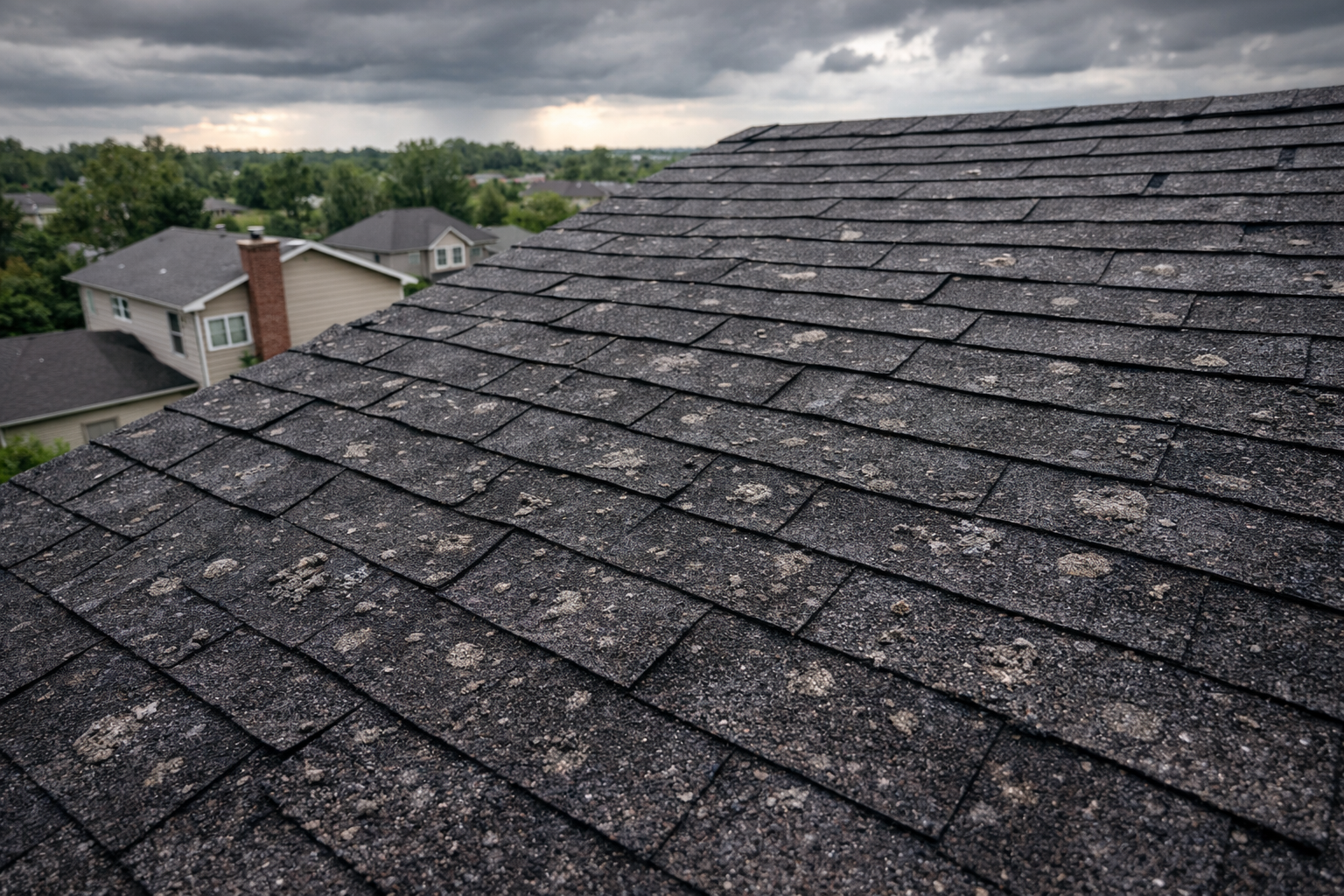
This is the most common roofing material in Crown Point, Merrillville, Hobart, Valparaiso, and everywhere in between. When hail hits an asphalt shingle, it displaces the protective granules on the surface. You will see dark spots where the granules have been knocked loose, exposing the black asphalt underneath.
From the ground, hail damaged shingles might look fine. The damage is in the granule loss, and you often cannot see it unless you are actually on the roof. But once those granules are gone, the exposed asphalt deteriorates rapidly from UV exposure and water absorption. A shingle that should have lasted another ten years might fail in three or four.
Larger hail can crack shingles outright, fracture the fiberglass mat underneath, or create soft spots where the shingle has been bruised. All of these compromise the waterproofing ability of your roof.
Metal Roofing
Hail typically does not penetrate metal roofing, but it can leave cosmetic dents. Small hail usually has no effect. Larger hail can create visible dents in steel and aluminum panels. Whether this matters depends on your priorities and your insurance policy. Some policies exclude cosmetic damage to metal roofs, while others cover it.
Standing seam metal roofs generally handle hail better than exposed fastener panels because the seams are raised above the flat panel surface.
Other Materials
Wood shake, slate, and tile roofs are less common in NWI but they do exist. Hail can crack slate and tile, and it can split or dent wood shake. These materials are more expensive to repair and require specialized contractors.
How to Spot Hail Damage
On the Ground
Before you worry about the roof, check these easier to reach areas:
- Gutters and downspouts. Dents along the top edge of your gutters are a strong indicator that your roof also took hits. Aluminum gutters dent easily and show hail damage clearly.
- Window screens and sills. Look for dents, tears, or marks on window screens and the aluminum or vinyl frames around them.
- Siding. Check the siding on the sides of your home that faced the storm. Dents or cracks in vinyl or aluminum siding confirm hail was present.
- Air conditioning unit. The outdoor AC condenser fins are soft aluminum and show hail damage readily. If your condenser has dents, your roof likely does too.
- Deck railings, mailbox, and outdoor furniture. Any soft metal or painted surface that was exposed during the storm can show evidence of hail.
If you see hail evidence on any of these items, it is worth getting your roof inspected.
On the Roof
A professional inspection is the only reliable way to assess hail damage on a roof. An experienced roofer will look for:
- Random pattern granule loss. Hail damage creates a scattered, random pattern of dark spots across the shingle surface. This is different from normal aging, which tends to be more uniform.
- Soft spots. Pressing on a hail damaged area will feel softer than the surrounding shingle because the fiberglass mat underneath has been fractured.
- Cracked or broken shingles. Larger hail can visibly crack shingles, especially older ones that have become more brittle.
- Damage to flashing, vents, and boots. Metal components on the roof show dents just like gutters do. Cracked pipe boots around plumbing vents are a common finding after hailstorms.
We inspect hundreds of roofs after hailstorms across Northwest Indiana. Many homeowners are surprised by how much damage we find on roofs that looked perfectly normal from the street.
What to Do After a Hailstorm
Step 1: Check for Obvious Damage
Do a quick walk around your property and look at the ground level indicators listed above. Check your attic for any signs of water intrusion. Do not get on the roof yourself.
Step 2: Get a Professional Inspection
Call a local roofing contractor and ask for a hail damage inspection. A reputable company will do this for free. They will get on the roof, document any damage with photos and measurements, and give you an honest assessment of what they find.
Timing matters. After a major hailstorm in NWI, every roofing company in the area gets flooded with inspection requests. The sooner you call, the sooner you get on the schedule. Waiting months to get an inspection makes the insurance process harder because it becomes more difficult to tie the damage to a specific storm event.
Step 3: File an Insurance Claim
If the inspection reveals hail damage, file a claim with your homeowners insurance company. Hail damage is a covered peril under virtually every standard Indiana homeowner policy.
Your insurance company will send an adjuster to inspect the damage independently. This is where having a thorough inspection report from your roofer becomes valuable. Your contractor can meet the adjuster on site to walk through the damage together and make sure nothing gets missed.
Step 4: Review and Approve the Scope
Once the insurance company approves your claim, review the scope of work carefully. Make sure it covers all damaged components, not just the shingles. Flashing, vents, pipe boots, ridge cap, and starter shingles all need to be addressed if they were damaged.
If the approved scope does not cover everything your contractor identified, a supplement can be filed requesting additional coverage. This is a normal part of the process and happens frequently.
Step 5: Get the Work Done
Choose your contractor and schedule the replacement. You are not required to use any company your insurance recommends. Pick someone local with a strong track record in NWI.
The typical timeline from hailstorm to completed roof replacement is four to eight weeks, depending on the time of year and how busy local roofers are. After major storm events, it can take longer.
The Timeline Trap
One of the biggest mistakes NWI homeowners make is waiting too long after a hailstorm to get their roof inspected. Life gets busy, the roof does not look bad from the ground, and months or even a year goes by.
The problem is that most Indiana insurance policies require you to file within one year of the damage. Beyond that, your claim may be denied entirely. And even within that window, the longer you wait, the harder it is to prove that damage was caused by a specific storm rather than by general aging.
On top of that, a hail damaged roof that sits through another Indiana winter is asking for trouble. Those compromised shingles with missing granules are going to absorb water, freeze, crack, and fail much faster than they would have otherwise. A $12,000 insurance covered replacement can turn into a $15,000 out of pocket expense if you miss the filing window.
Storm Chasers: A Word of Caution
After every significant hailstorm in NWI, out of state roofing companies descend on the area. They knock on doors, offer free inspections, and promise to handle everything with your insurance company. Some are legitimate operations that do quality work. Many are not.
Red flags to watch for:
- They will not provide a local physical address
- They pressure you to sign a contract on the spot
- They offer to cover your deductible (illegal in Indiana)
- They cannot show proof of Indiana insurance coverage
- Their online reviews are sparse or nonexistent
A local company with deep roots in the community is always the safer choice. We have been here since 1923 and we will be here long after the storm chasers leave town.
Preventing Future Hail Damage
You cannot prevent hailstorms, but you can make choices that minimize the impact:
- Choose impact resistant shingles. Class 4 rated shingles are designed to withstand hail impact. Many insurance companies in Indiana offer premium discounts for homes with Class 4 roofs.
- Consider metal roofing. Metal handles hail significantly better than asphalt over the long term.
- Keep trees trimmed. Hail combined with wind can break branches that then damage the roof. Keep large limbs trimmed back from the roof surface.
- Maintain your roof. A roof in good condition handles hail better than one that is already compromised by age and neglect.
Frequently Asked Questions About Hail Damage
How big does hail need to be to damage asphalt shingles? Damage usually starts around the size of a quarter (one inch). Smaller hail can mark shingles cosmetically without compromising the seal. Larger hail (golf ball and up) often causes immediate functional damage. NWI gets a mix of sizes in summer storms.
Will my insurance rates go up if I file a hail damage claim? A single weather event claim typically does not raise your rates in Indiana, since hail is not within your control. Multiple weather claims over a few years can put your policy at non-renewal risk. We always recommend filing a legitimate hail claim, but talk to your agent if you have had recent claims.
How long after a hailstorm do I have to file an insurance claim? Most Indiana policies give you one year from the date of loss to file, but the earlier the better. Adjusters have a much easier time identifying storm-specific damage in the first 30 to 60 days. After a season passes, the conversation gets harder.
Can hail damage cause leaks immediately or does it take time? Both happen. Severe hail can puncture shingles and underlayment immediately. More commonly, hail damages the protective granule layer and weakens the shingle, leading to leaks months or years later when the compromised shingle finally fails.
What should I do if my adjuster denies hail damage that I can clearly see? Get a second opinion from an independent roofing contractor and request a re-inspection. You can also ask for the adjuster's supervisor to review. If the denial sticks and you still believe damage exists, you have the right to hire a public adjuster who works for you instead of the insurance company.
Ready for a Free Roof Inspection?
Contact Maris & Son Roofing today. Fourth generation family business serving Northwest Indiana since 1923. Call us at (219) 738-1940 or request a free estimate.
Ready for a Free Estimate?
Contact Maris & Son Roofing today. We would love to hear from you.